Rybicod
Trail Series
Trail Series
Couldn't load pickup availability
Self-paced learning overview
- ⬇️ Digital file available after purchase
- 📚 Long-term availability
- 🔒 Secure checkout
- 🗓️ Content updated in 2026
1. Problem Statement
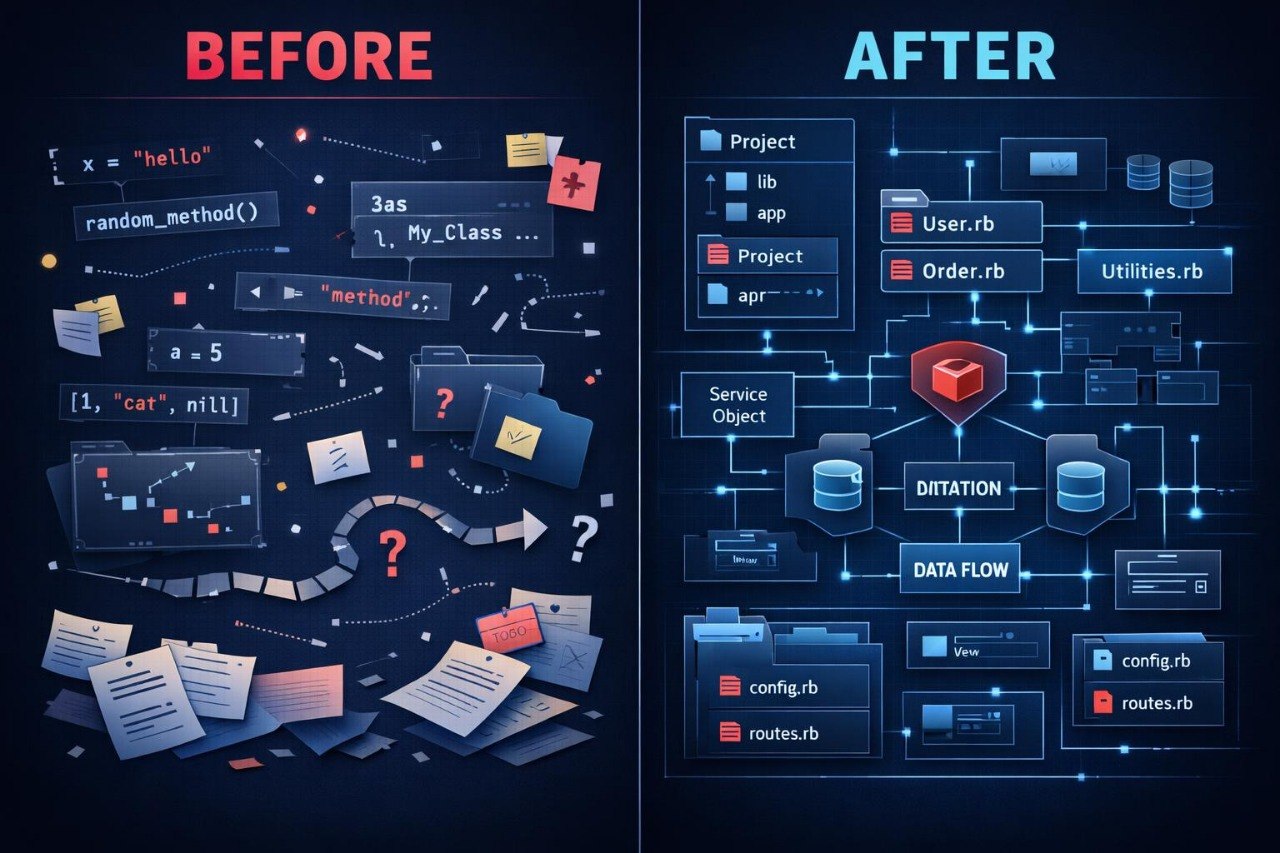
Struggling to connect everything you've learned into one organized Ruby workflow? You're not alone. After studying syntax, methods, classes, modules, files, and data handling, many learners still find it difficult to organize a broader learning project. Individual topics may remain disconnected, making it harder to understand the overall structure of Ruby. Data, objects, validation, and component interaction require a clear organization so the code remains readable as it grows. Trail Series is designed to bring these topics together into one structured learning journey.
2. Solution
This course will teach you how to organize a complete Ruby learning project using the concepts explored throughout the Rybicod course collection. You will work with classes, modules, files, collections, data validation, project organization, and interaction between separate components. The materials gradually connect individual topics into one readable system while reducing unnecessary repetition. Each module concludes with practical exercises that review the newly introduced concepts within a broader learning scenario. Trail Series is intended for learners who wish to complete the longest learning path in the Rybicod collection.
3. What's Inside
Module 1: Ruby Structure Review — reviewing syntax, variables, conditions, loops, and methods.
Module 2: Working With Collections — arrays, hashes, iteration, searching, sorting, and grouping.
Module 3: Methods and Program Organization — reusable methods, parameters, and return values.
Module 4: Object-Oriented Foundations — classes, objects, attributes, initialization, and instance methods.
Module 5: Relationships Between Classes — interaction between entities, responsibility distribution, and program organization.
Module 6: Modules and Shared Behavior — shared functionality through modules.
Module 7: Multi-File Project Structure — organizing code across multiple files and folders.
Module 8: Working With Data Files — reading, writing, and preparing text data.
Module 9: Validation and Error Handling — reviewing values and organizing expected error scenarios.
Module 10: Service Objects and Supporting Components — separating supporting operations into dedicated classes.
Module 11: Refactoring Practice — improving readability and reducing repeated code.
Module 12: Project Review Checklist — reviewing files, dependencies, naming, and component interaction.
Module 13: Guided Learning Project — a complete learning scenario combining the previous modules.
Module 14: Final Knowledge Review — review exercises, questions, and checklists covering the course topics.
4. Who is this for?
✅ Perfect if you...
- already understand the basics of Ruby programming;
- want to complete the full Rybicod learning path;
- enjoy working with broader coding examples;
- are interested in organizing Ruby projects;
- would like to review the core topics within one structured program.
❌ Not for you if...
- you are just beginning with programming;
- you only need introductory materials;
- you are looking for a course focused on a single narrow Ruby topic.
5. What You'll Learn
- Organize a Ruby project structure
- Work with classes, objects, and modules
- Use arrays, hashes, and collections
- Pass data between components
- Organize multi-file projects
- Read and write text files
- Create reusable methods
- Divide logic between classes
- Use supporting components
- Review data before processing
- Examine existing Ruby code structures
- Reduce repeated code
- Complete a comprehensive learning scenario combining the core course topics
- Use a final review checklist for your project structure
6. Refund Terms
Trail Series includes structured course materials for independent learning. If the course does not meet your expectations, you may request a refund within 30 days according to the store policy. This gives you time to review the materials, modules, examples, and exercises and decide whether the course format fits your learning needs. Please review the complete refund policy on the store before placing your order.
1. Who are Rybicod courses made for?
1. Who are Rybicod courses made for?
They are made for learners who want to study Ruby programming through structured materials, code examples, and practical tasks.
2. Do I need previous experience?
2. Do I need previous experience?
No. Starter plans are suitable for exploring the basics, while higher plans include broader topics.
3. What is included in the materials?
3. What is included in the materials?
Lessons, modules, code examples, exercises, checklists, and extra resources for self-paced study.
Share